
Manufactories of Art: From Moctezuma to Constable
Henry Christy, Henry Vaughan and the Hatters of South Gloucestershire
Chris Heal
University of Bristol
16 January 2010
Henry Christy, Henry Vaughan and the Hatters of South Gloucestershire
Chris Heal
University of Bristol
16 January 2010
| BM | British Museum |
| BRO | Bristol Record Office |
| CA | Christy Archive, Stockport Heritage Museum |
| CGPLA | Calendars of the Grants of Probate & Letters of Administration |
| CUP | Cambridge University Press |
| GA | Gloucester Archives |
| NG | National Galleries |
| ODNB | Oxford Dictionary of National Biography |
| OUP | Oxford University Press |
| TNA | The National Archives |
The two largest felt hat manufactories of South Gloucestershire in the nineteenth century were owned by the London-based Christy and Vaughan families, whose firms were among the leaders of the English hat industry. The premises were 10 minutes’ walk apart, one in the feltmaker hamlet of Watley’s End, north of Winterbourne, the other on an escarpment across the Frome River on the outskirts of Frampton Cotterell. These craft factories were the principal centres of production in wider farming and mining communities and dominated local hat production for 50 years. Combined, at their peak, they employed over 300 men1. Christy’s was to become the country’s premier, and last, felt hat firm2. The foreman of Vaughan’s, Stephen Francombe, and his wife, were known as the ‘king and queen of Watley’s End’3. Towards the end of local hat making in the 1860s, the manufactories were part owned, one by Henry Christy and the other by Henry Vaughan, and each man was responsible in different ways for their eventual closure.
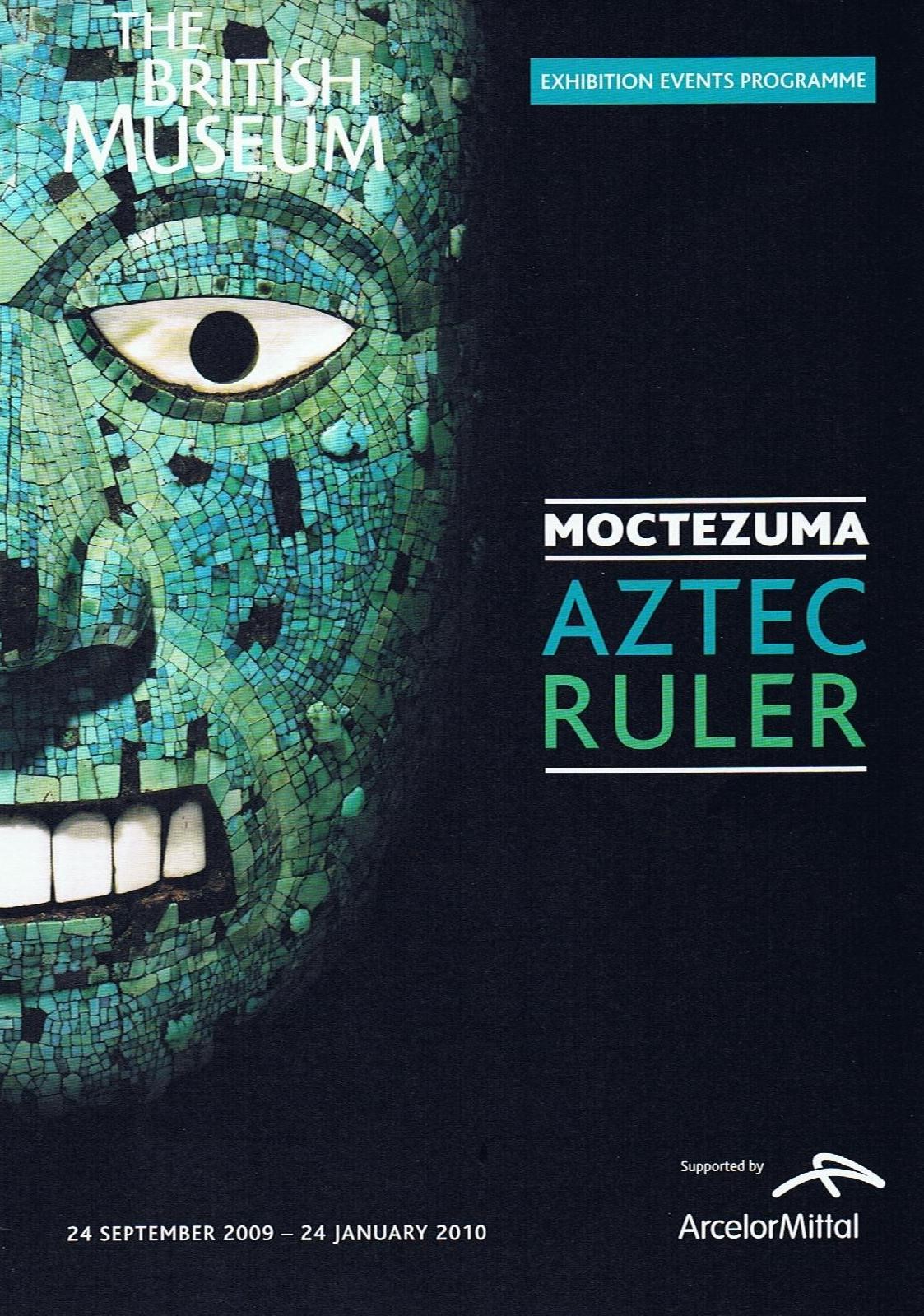
Figure 1: ‘Turquoise mask’, c. 1400-1521, Mexica-Miztec from the Christy Collection at the British Museum.
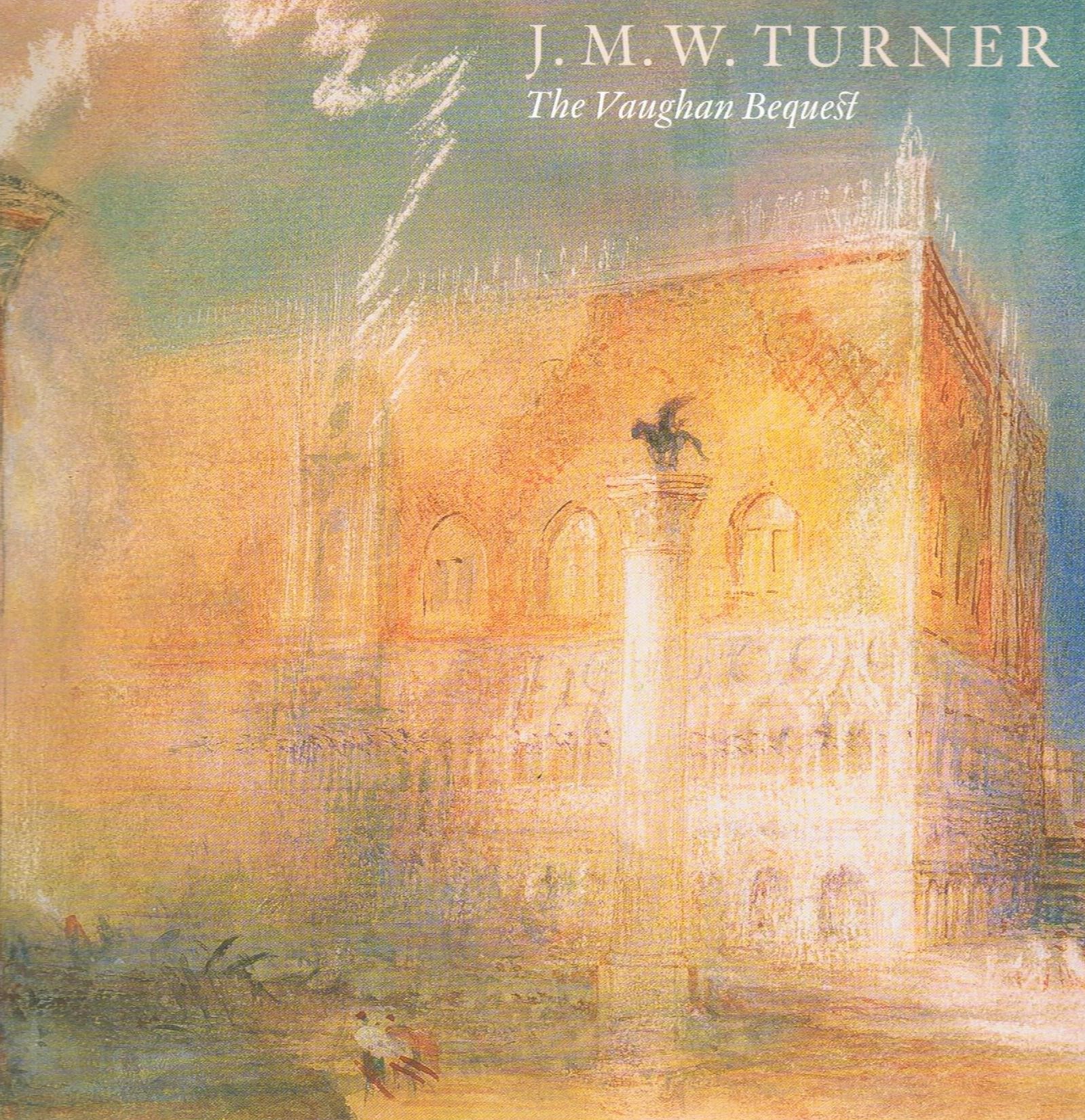
Figure 2: Detail from ‘The Piazzetta, Venice’, 1842, from the Vaughan Bequest, National Galleries.
Christy and Vaughan were also two of the most prominent collectors in Victorian England. Their legacies are curated with respect and gratitude by the country’s leading museums and galleries and are still, in 2010, regarded as centrepieces of public offerings4. For example, the British Museum’s major exhibition over the end of 2009, Moctezuma: Aztec ruler, uses in its publicity and at its heart nine rare mosaics collected by Christy in Mexico in 18565. The mosaics form part of the Henry Christy Bequest in 1865 to the British Museum of over 600 pieces of prehistoric and ethnographic material. The museum also holds a bust of Christy6. In January 2010, as for the past 100 years, two major, but independent, free-entry, exhibitions of works by J M W Turner, bequeathed by Henry Vaughan will be held at the National Galleries of Scotland and Ireland, in Edinburgh and Dublin7. Most famously, Vaughan bought John Constable’s Hay-Wain in 1866 and later donated it to the nation8. In March 1886, Sir Frederick Burton, the Director of the National Gallery in London, received a letter offering the painting; Vaughan concluding by apologising ‘for the trouble I would thus give you’. The announcement that the picture had been hung in the National Gallery that morning was cheered in the House of Commons10. ‘The outstanding quality of the painting and Vaughan’s almost apologetic tone are both typical of the collection he built, and the character of the man who created it’11. No likeness of Vaughan has been found.
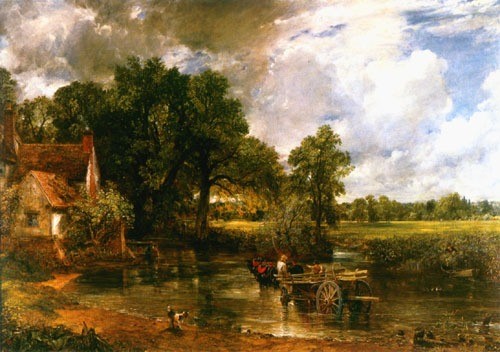
Figure 3: The Hay-Wain, John Constable, 1821.9
There is much that is coincidentally similar in the early lives of the two Henrys. They were born in 1809-10 within a year and within a few miles of each other; the families lived in Surrey near their Southwark factories at Bermondsey Street (Christy) and Gravel Lane (Vaughan). This area on the south bank of the Thames was the long-term centre of the English felt hat industry. Christy was a third son, Vaughan a second; both men were grandsons of their firm’s founder, Miller Christy and the first George Vaughan12. At a business level, at least, the families were well known to each other, especially during the national hatters’ strikes of 1831 and 183413. The Henrys were born into Quaker families although reassessed their commitment, Christy gradually moved to the established church while Vaughan was ‘inclined to Unitarianism’14. Neither man married; they travelled widely and regularly. Both were independently wealthy, their money made largely from their family hat businesses, but also by investment. They had reputations for strong charitable giving and social concern, Christy particularly with the abolition of slavery, the Corn Laws, the oppressed in Syria, Danish war wounded, and the relief of the 1847 Irish famine, during which ‘his own life nearly fell a sacrifice to his efforts’; Vaughan with gifts and loans to art institutions, and to hospitals and the poor15. Each had a strong hand in one major academic publication. Each came reluctantly to play a crucial part in their firm’s South Gloucestershire manufactories.
However, their chosen lives were very different. Christy was for many years an integral if increasingly disgruntled member of the family firm, twice resigning his partnership. Vaughan quickly left all business management to his brother when his father, George II, died in 1828. Vaughan, a few months short of 21 years, was left £5,000 and, shared with his brother, George III, the business as a ‘hat manufacturer in Gravel Lane … and at Winterbourne’, with ‘all my freehold estate situate at or near Wadley (sic) and Winterbourne in the County of Gloucester’16.
Henry Fell Christy, one of 12 children, was apprenticed to his father in 1824 and trained from boyhood to follow him into the business17. About 1830, Henry roomed with a younger brother over the kitchen in the family home attached to the firm’s Canal Street, Stockport, works18. In 1841, aged 30, he lived with his parents at Montagu Place, Lambeth, with seven other siblings and ten servants19. He was taken into partnership in 184320. His father, William Miller Christy, operated more as a banker and an entrepreneur that as a hat manufacturer. He was the inventor of the penny receipt stamp in 1853 and significantly involved with the formation of two of the major English banks of the late twentieth century: Midland and National Westminster21. In 1824, he co-founded with Isaac Lloyd of the Birmingham bank, the Stockport and East Cheshire Bank, later the Westminster. He was one of the original directors of the London Joint Stock Bank, later the Midland, and became its chairman in 185322. He was also a director for many years of the National Provident Institution23, and treasurer of the East Surrey Reform Registration Society24. William Miller’s time in banking brought him into sharp dispute with his family as he withdrew investment capital from the hatting business without agreement25. William used the capital from his forced Stockport bank share sale to start in business on his own account in 1833 as a cotton spinner and shirtings manufacturer, first at Hillgate Mill in Stockport, later taking over the Christy hat firm’s own Fairfield Mill in Droylsden27. There was further fury from his hatting partners when he became a director of the Metropolitan Gas Company in 1835.
Henry was given the management of the Stockport hat works where he was noted for a tongue that could ‘sting like nettles’28. He succeeded his father as a director of the Joint Stock Bank, securing an income for little effort that was usefully separate from the family business29. Henry summarised his view of the Christy business partnership in 1844 in a letter to a cousin: ‘The far greater grievance to my thinking is that dissatisfied, grudging and restless spirit which blasts our concern, lessens our gains and prevents us enjoying what we do get, by our being constantly tormented with distrust and hatred one of another – this spirit is the Devil if I know right from wrong’30.
Opposition to William Miller continued as he spent more and more of his time away from Christy’s. In 1845, he struck Henry in a ‘business argument and lost his last ally in the firm’. He was forced into retirement.31
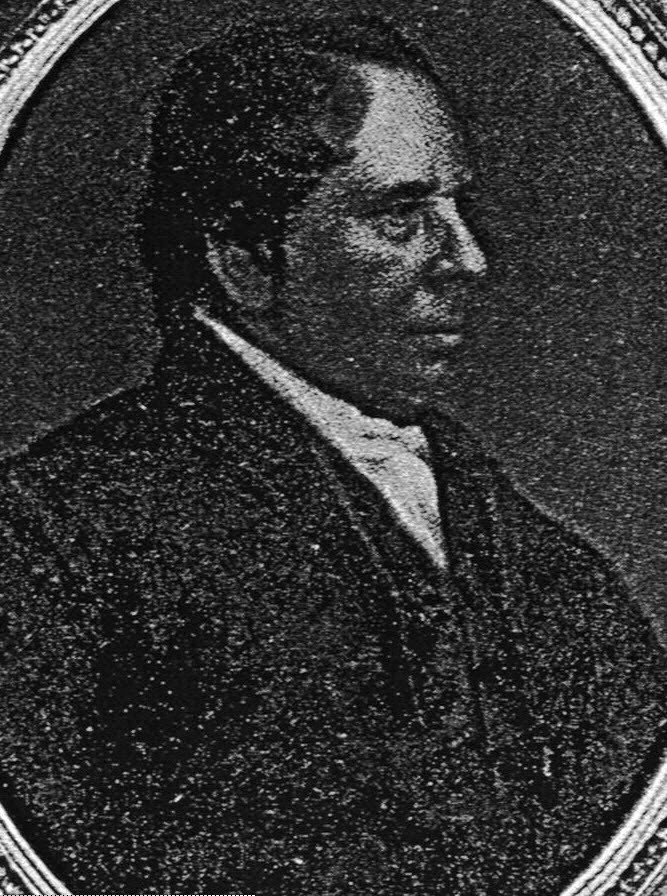
Figure 4: William Miller Christy
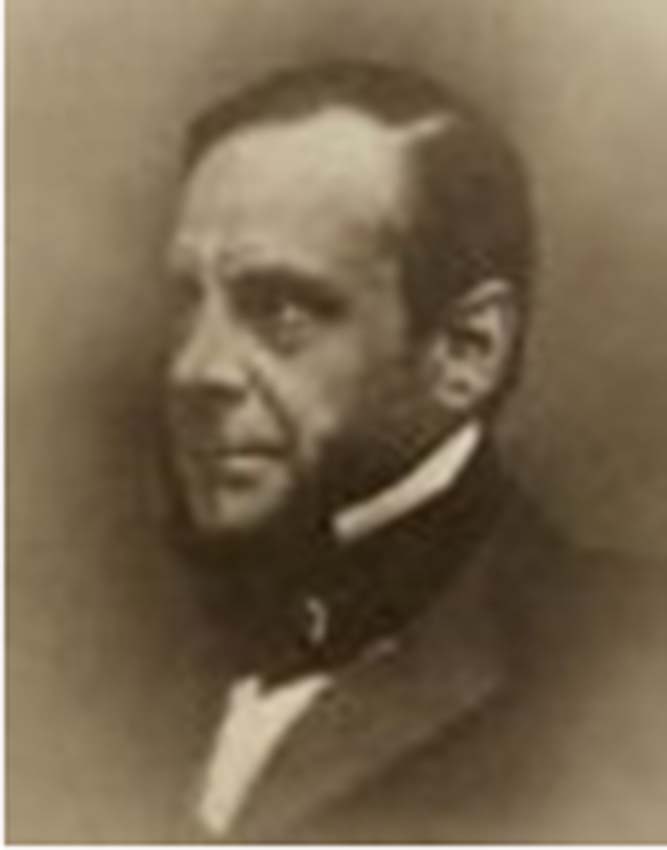
Figure 5: Henry Fell Christy.
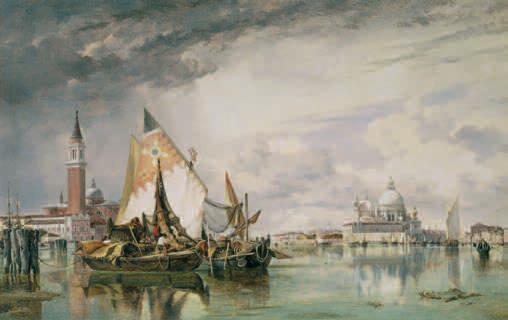
Figure 6: San Giorgio Maggiore and the Salute, Venice, with Fishing Craft of Chioggia and the Lagune, by E W Cooke; exhibited at the Royal Academy in 1853.34
Henry’s growing disillusionment with the firm was balanced by a, perhaps, romantic desire for travel adventure. He was an avid reader of Byron and paid handsomely for one of his autographed letters32. Henry’s strong interest in ethnology provided the reason for his first trip to the Mediterranean in 1850. In Venice, he met E W Cooke, the equally peripatetic marine painter and gardener.33
Henry brought back to England a series of votive figures from a site of a temple of Venus in Cyprus, which he gave to the British Museum in 1852, and a large collection of Eastern fabrics.35 Among the collection, following a visit to the Palace of the Sultan in Constantinople, was a sample of a hand made, loop pile fabric which was new to the western world.36 Henry’s brother, Richard, who had joined their father’s cotton business, analysed how to mechanically reproduce the loop pile.37 He patented a loom in the silk hat plush weaving mill at Stockport to produce terry towelling on a large scale, the first machine woven towel in the world.38 Christy towels were shown in the Great Exhibition of 1851 at Crystal Palace, where a set was presented to Queen Victoria.39 She liked them so much she immediately ordered six dozen more.40 Christy ’Royal Turkish Towels’ eventually took over the Fairfield Mill.41
The ethnological displays at the Great Exhibition had a ‘strong influence’ on Henry, ‘focusing his interests on the cultures of contemporary hunter-gatherer societies’42. Henry retired from business at the beginning of 1852, aged 42, to devote himself to his scientific interests. In his diary, he wrote that while his accomplishment was ‘short of what it should have been, there is hope that life has not been wholly in vain as regards the good of others … The past year has been as regards prosperity most eventful. The step I took in retiring from Business, whilst it cuts off many influential associations – limits & narrows one’s field of action & shears one of much power – is to myself in many ways so full of advantage that I have never once during the past seven months repented of the step. The position in business into which circumstances forced me … [ends]’43.
In 1852 and in 1853, Henry visited Denmark, Sweden and Norway, ‘drawn by the ethnographic museums in Stockholm and Copenhagen’; the next year Germany and Venice; in 1856-7 Canada, the British North American Possessions, the United States, Cuba and Mexico.44 In the United States, he met Martin Robinson Delany, an African American intellectual, journalist, physician, army officer, politician, and judge, and supported his project to set up a colony for emancipated slaves in Yorubas in the Niger Valley. Although the subsequent expedition of 1859-60 failed, Henry ensured that it was properly staffed with a botanist, geologist and zoologist.45
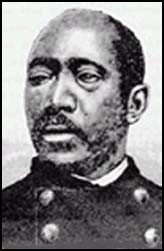
Figure 7: Martin Delany (1812-1885).
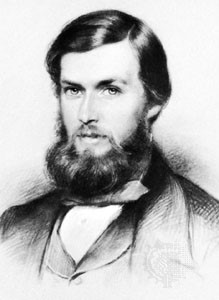
Figure 8: Sir Edward Burnett Tylor (1832-1917), detail of a chalk drawing by George Bonavia, 1860; in the National Portrait Gallery, London.
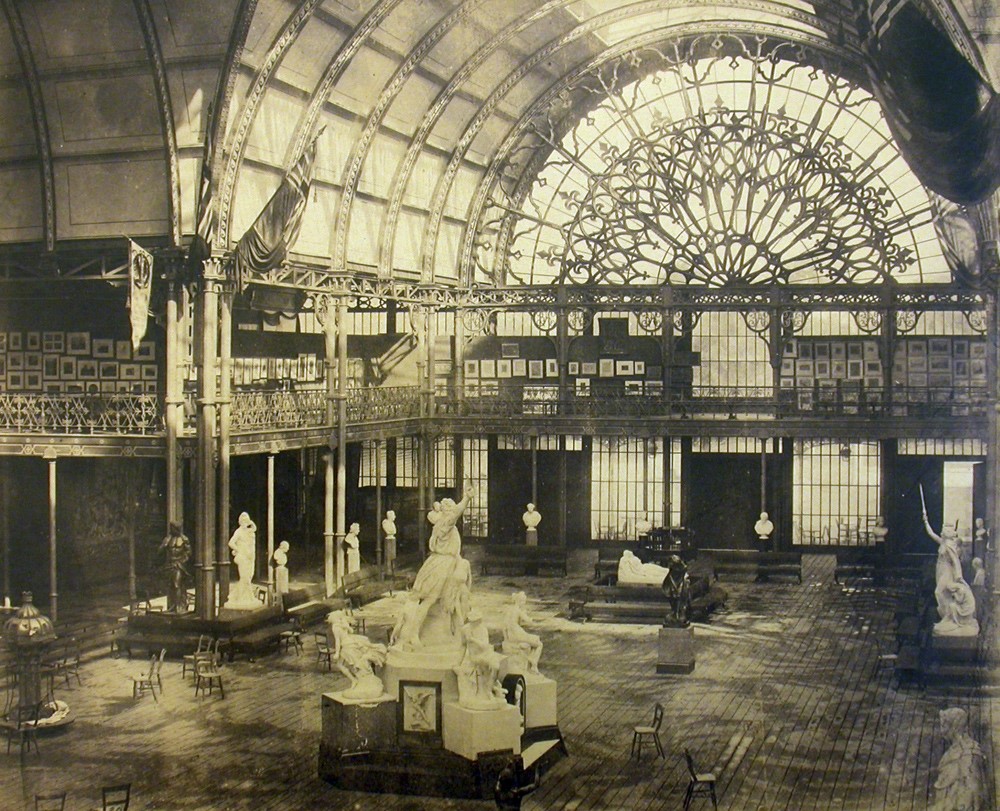
Figure 9: The Transept Gallery of the Art Treasures Palace, Manchester, 1857.
© Manchester City Galleries.
In Havana in 1856, Henry ‘accidentally in an omnibus’ met Edward Burnett Tylor, 20 years his junior, also from Southwark, a fellow Quaker and student of ethnology, and future ‘father of anthropology’.46 Henry made such an impression on Tylor that he started his book of the trip with the chance meeting: ‘He had been in Cuba for some months, leading an adventurous life, visiting sugar-plantations, copper-mines, and coffee estates, descending into caves, and botanizing in tropical jungles, cruising for a fortnight in an open boat among the coral-reefs, hunting turtles and manatis, and visiting all sorts of people from whom information was to be had, from foreign consuls and Lazarist missionaries down to retired slave-dealers and assassins’.47 The pair went on to Mexico together where Henry made a very large collection including the amethyst mosaics featured in the British Museum’s 2009-10 exhibition.
Back in England in 1857, Henry lent part of his growing collection to the Manchester Art Treasures Exhibition. Over five months, this daring exhibition attracted more than 1.3 million visitors, from royalty to mill and factory workers. Titus Salt paid for 2,500 workers from his Saltaire Mills to travel to Manchester on three special trains. Charles Dickens disagreed with Friedrich Engels about its success. Dickens felt the ‘care for the common people is admirable … but they want more amusement, and particularly something in motion, though it were only a twisting fountain. The thing is too still after their lives of machinery; the art flows over their heads in consequence.” However, Engels told Karl Marx that ‘everyone up here is an art lover just now and the talk is all of the pictures at the exhibition …’48
Over the next two years, two events changed Henry Christy’s life. The first, the death of his father in 1858, aged 80, of heart disease, forced him back temporarily into the hat firm to conduct a business rescue.49 The second, the publishing of Darwin’s On the Origin of the Species, turned him from an enthusiastic and knowledgeable amateur into a serious scholar.50
William Miller Christy left a small fortune to his children including his Christy shareholding; Henry was already a wealthy man, ‘fabulously wealthy’, says Bibby.51 In 1834, William Miller declared that ‘we must soon be looking to [machinery] or we shall become antiquated and the Americans on one side and the Continent of Europe on the other will be 20 years in advance of us’.52 Christy’s dabbled with new machinery without full commitment for the next 20 years of inaction. They next showed serious interest in American hatting mechanisation when William Miller inspected a felt body-making machine.53 ‘First, the rate of labour is much greater and the saving consequently greater; second, it will form a body lighter and more even than hand bowing and the demand in America is lightness.’54
Increasingly, the next Christy generation, more capitalists than feltmakers, fretted at the constraints placed on improving machinery, but with William Miller forced out, there was no leader. The firm was buffeted by the rise of the silk hat in the 1840s and the recovery of the felt body was still delicate. It took William Miller’s death and Henry’s return to break the deadlock. Stockport had by then become the firm’s felt hatting centre, far outstripping Frampton Cotterell, Stockport’s precursor and earlier superior.55 In 1859, Henry left for a seven-week trip to America with William Barber, the firm’s Stockport technical manager, and the pair paid $5,765 for much new machinery for installation at Stockport.56 ‘We had many difficulties in this introduction’, said Barber, ‘but we gradually surmounted them all. Entirely green hands were taught in most case for I found it preferable to get such than old hatters, and new machines had to be made as we extended’. Barber was extremely successful and, by 1862, production at Stockport for the new machines was 100 dozen hats a week; by 1863, 130 dozen. In 1868, Barber said that ‘some weeks this year we have exceeded 1,800, and at a push with our present machinery we could turn out 2,000 dozen’.57
With the publication of Darwin’s On the Origin of the Species, suggests Cook, ‘the debate about human antiquity gave new purpose to Christy’s early pursuits’ and concentrated ‘his influence on the emergent disciplines of ethnography, archaeology and anthropology’.58 In 1860, the French palaeontologist Édouard Lartet discovered stone tools at Aurignac in France and Henry quickly initiated a correspondence. Lartet’s fresh finds prompted Christy to offer to finance a collaborative expedition.59 With the hatting firm on a sounder footing, Henry again resigned in 1862.60 Next year, in Algeria, Henry and Monsieur Féraud, an interpreter to the French army, found several thousand Celtic monuments – ‘dolmens, menhirs, cromlechs, and tumuli’ – in a small area at the sources of the Bou-Marzbourg, thirty-five kilometres south-west of Constantine. Numbers of the tombs contained human remains and, in one of them, a ‘medal bearing the name of Faustina who flourished AD 141’, thus dating the necropolis to the second century of Christianity.61
Later that year, Henry joined Lartet, ‘at a considerable sacrifice of money and time’, at the village of Les Éyzies de Tayac in the Vézère river valley.62 The importance of what happened over the next three years can hardly be exaggerated. Thousands of finds emerged from prehistoric settlements in the valley’s rock shelters.63 Using a new understanding of stratification, where ‘one layer of occupational debris must be older than the layer above’, Henry and Lartet found one cave where the Stone Age debris was fourteen feet deep. ‘Knowledge of the Palaeolithic Period was revolutionised’, leading eventually to the discovery of the tools, art and bones of Cro-Magnon man; ‘the whole antiquarian world followed their excavations with breathless interest and awaited with impatience the definitive publication of their results’.64 In a review 100 years later, Lartet and Henry were credited with producing a classification of the Palaeolithic entirely on zoological and palaeontological grounds. ‘They must be remembered not only for their exploratory work in the south French caves, and their recognition of Palaeolithic art, but for their introduction of some scheme of relative chronology into the remains of the Stone Age’.65
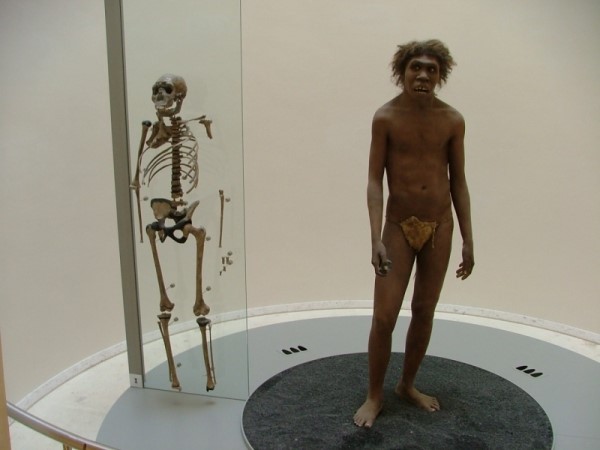
Figure 10: The National Prehistoric Museum at Eyzies de Tayac was founded in 2004 It concentrates on the Palaeolithic era: the history of the Neanderthals, who vanished 50,000 years ago, and of the Cro-Magnon man, who lived in socially structured groups, buried his dead and made objects that had a symbolic meaning.
Preliminary reports of the dig were published in 1864 by Lartet in Comptes rendus and by Henry in the Transactions of the Ethnological Society of London.66 In the latter, Henry admitted that ‘the facts here stated do bear on the hitherto presumed duration of man’s existence of earth, and can only be fairly interpreted in favour of a higher antiquity that was once assigned to it’, but that ‘nothing in the investigation of uncivilised or primitive man … appears to necessitate a change in the old cherished idea of the unity of the human race’. Henry began work on an ‘exhaustive book-length treatment of the Dordogne caves’ called Reliquiae Aquitanicae – ‘a finer, but at the same time a sadder, antiquarian work …it would be difficult to find … which ought to be in every public library in the kingdom, and in the hands of every archaeologist’.67
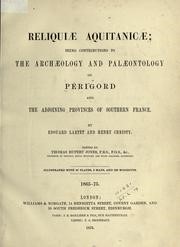
Figure 11: Reliquiae Aquitanicae, begun by Henry Christy, continued by Édouard Lartet on Christy’s death, and finished by British palaeontologist Professor Thomas Rupert Jones on Lartet’s death in 1870.
In 1865, Henry caught a severe cold while visiting recently discovered caves near Dinant in Belgium. After reaching Paris, he set off for La Palisse in the Auvergne and died a week later of pneumonia, age 55; ‘friends were telegraphed to, and a brother, Joseph, arrived just in time to see him die’.68 Nominated by many of the prominent men of the times, Henry was already elected fellow of both archaeological societies, the British Archaeological Association and the Archaeological Institute; the Society of Antiquaries; and the Ethnological, Geographical and Linnaean societies; and was on the point of membership of The Royal Society.69
In his will, with his estate reduced to £60,000, Henry instructed his trustees to give £5,000 and his magnificent collection of prehistoric and geological specimens to an institution ‘in such a manner as will make it most conducive to the cause of archaeological science and ethnology’.70
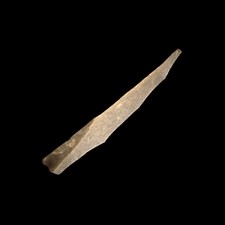
Figure 12: A flint burin, Late Magdalenian, about 12,500 years old from the rock shelter of La Madeleine. A burin is a common Stone Age tool which could be held like a pencil. They were used for drawing but also for cutting out pieces of bone and antler, which were then made into everyday items such as needles, fish hooks, harpoon and spear tips and jewellery.
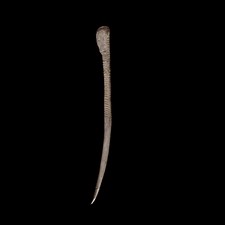
Figure 13: A decorative bone pin, Early Aurignacian period, about 34,000 years old, from the abri Lartet in the Gorge d’Enfer. Deliberately made jewellery is unknown in Old Stone Age sites in Europe before the start of the Upper Palaeolithic. The decorated pin is a rare piece. There is nothing to compare with it in the whole of western Europe.
Both excavated in the Dordogne and bequeathed by Henry Christy: British Museum.
Negotiations started with the British Museum but, because it had no space, Henry’s own suite of apartments at 123 Victoria Street, Westminster, was leased and the exhibits kept there where they could be viewed by the public. One of the trustees, Mr A W Franks, a keeper of the British Museum, was in a ‘semi-curatorial position from practically the beginning [and took up] residence in another part of the house in Victoria Street’.71 After 28 years, the collection was eventually transferred to the British Museum.71
It was the success of Henry’s trip to the United States in 1859 which, in the 1870s, led to the decision to shut Frampton Cotterell. Throughout its life, the manufactory was always without any power, not even by water. Year by year, the firm extended its life in order to take advantage of the local hatter’s excellent feltmaking craft skills.73 However, Stockport’s increasingly effective equipment finally forced closure in 1871, evidencing Sabel and Zeitlin’s comment that ‘technological choices entail substantial investments in equipment and know how which constrains future choice.74 The comment implies winners and losers; and Frampton Cotterell was certainly a loser. The overall effect of closure was so traumatic that in the 1880s the village population had declined 16% from its 1841 peak.75 By World War 1, just over half the houses in Frampton Cotterell were either uninhabitable or else in need of serious structural renovation.76
It is now time to turn to the other Henry – Henry Vaughan. He was privately educated at Walthamstow alongside the future prime minister, Benjamin Disraeli, who was seen as ‘an odd unsociable lad, who kept aloof from games and from company, and never took any other boy into his confidences’.77 Henry’s brother, George, was the third in line of that name and their grandfather was the founder of the Vaughan hatting firm. In 1742, feltmaker George Vaughan I (c1716-1780) married Elizabeth King from a family of Thames watermen in the Royal household.7 It is a pleasant speculation that King’s grandfather (Henry’s great, great grandfather) participated in the 1717 river procession that made famous Handel’s Water Music.79 After her marriage, King received over seven properties around Gravel Lane, Southwark, in three inheritances; this fortune provided the Vaughan family home as well as the long-term centre for their hat-making firm.80
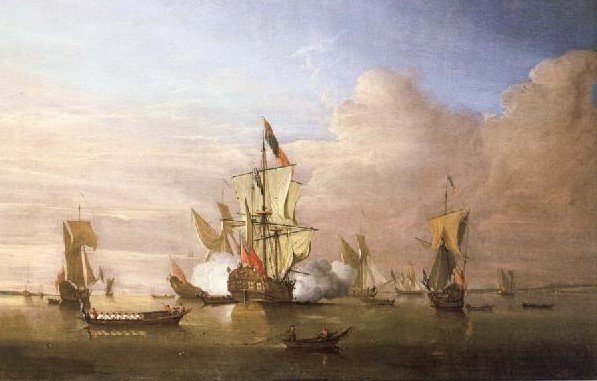
Figure 14: Peter Monamy: The Royal Yacht Peregrine arriving in the Thames estuary with King George I aboard in September 1714 (in the style of Willem van de Velde the younger).
The Vaughan’s Watley’s End outpost was established by the founder’s son, George II, in about 1808.81 He was a man much beset by trade disputes and these may have encouraged his move to the country. In 1777, he petitioned and then gave personal evidence to Parliament, complaining that the ‘hatters in and near the City of London have been for several years past, and now are, under very many difficulties in carrying on their manufactories, by reason of the great scarcity of journeymen in the trade and of their repeated demands for an advance of wages to unreasonable prices, and to lessen their usual hours of work …’.82 Two of his men were shot one night in the middle of the Gordon Riots as they tried to pull down the turnpike at Blackfriars Bridge.83 Ten years later, in 1790, George clashed bitterly with his hatter journeymen who took out ‘the finest and most valuable materials, and put in coarse, inferior stuff in the lieu thereof, by which wicked practice their masters suffer considerable loss in their trade and reputation’.84 Out of eighty-six men in Vaughan’s employment in London only ten stood out against the practice and, in a ‘most dangerous and alarming conspiracy’, the ten were fined five guineas each by their workmates who then all left Vaughan’s workshop. A letter writer opined: ‘It reflects no small credit on the justice of Messrs Vaughan and Co that they are determined to support the persecuted journeymen and to punish the miscreants to the utmost severity of the law.”85 The second George Vaughan also knew the Prince Regent (the future King George IV) and took news to him in 1816 that Richard Brinsley Sheridan, the playwright, poet, theatre owner and MP, was ‘dangerously ill and really in great distress and want’. ‘Hat Vaughan’ was offered £500 by the Prince, who had previously been swindled of £3,000 by Sheridan, to alleviate anonymously Sheridan’s debts and discomfort.86
George II noted in a very lengthy will that he retired from business on Christmas Day, 1825. When he died three years later, Henry and George III arranged probate by making a ‘solemn and sincere declaration’. In the 1830s, George III was intimately involved with the Christy family in the national hatting strikes. In 1831, George was in the chair as the master hat manufacturers met at the Museum Tavern in London’s Blackfriars Road to decide their response to the union’s latest demand.87 Men at Vaughan’s broke first and went back to work to ‘save the shops, as they call it, that is go in foul on Vaughan’s terms’.88 In 1834-5, again alongside the Christys, George saw out a six month bitter strike. He became delusioned and said he was ‘doing nothing to his premises in Gloucestershire because he saw everything was going northward’.89
In 1834, in the middle of the trade turmoil, Henry lived with his widowed mother Elizabeth, George, their sister Mary, and a number of live-in servants, at 28 Cumberland Terrace on the east side of Regent’s Park. They were together until the 1850s. One of the city’s most elegant buildings, Cumberland Terrace was designed by John Nash, a friend of J M W Turner, and finished about 1827.90 Henry’s background gives little indication that he was to become a man of refined tastes. However, his independent wealth and, it can be imagined, watching his brother grapple day by day with his industrial problems, made easier his decision to ‘indulge the enthusiasms he had developed for travelling and collecting’.91
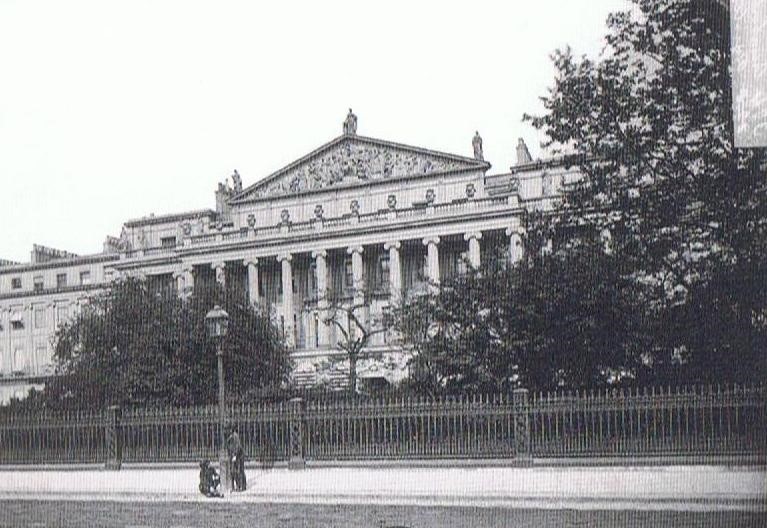
Figure 15: Cumberland Terrace, east of Regent’s Park, London, c. 1870-1900.92
In 1848, Henry offered a benefaction of £5,000 to University College, London, which was to remain anonymous until after his death. The gift was made on behalf of Henry’s mother who had recovered from illness, and is used today for scholarships.93 Four years later, in possibly his first commission, Henry asked the Swiss artist Alexandre Calame for a painting; The Lake of Thun was completed in two years.
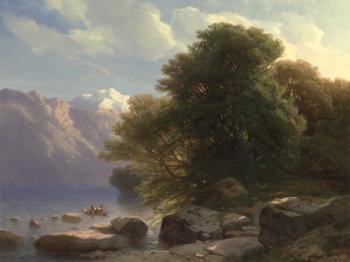
Figure 16: ‘The Lake of Thun’, Alexandre Calame, commissioned by Henry Vaughan in 1852, finished, in 1854.94
Henry is missing from the census of 1861 when he may have been on his extensive travels to Italy and Spain. From 1871-91, he is at the same Regent’s Park address with servants: butler, cook, housemaid and warehouseman.95 He had an iron safe in his bathroom in which he kept his collection of coins. His works by Constable were chiefly hung in the dining room, while the Turner watercolours appear to have been distributed around the house, some framed, although most kept in portfolios. Henry owned a telescope, silverware, bronzes, ivories, larger sculpture and reliefs, stained glass, Venetian glass, a table with a Roman mosaic top, frames from Siena and Venice, Rembrandt etchings and Spanish clocks.96
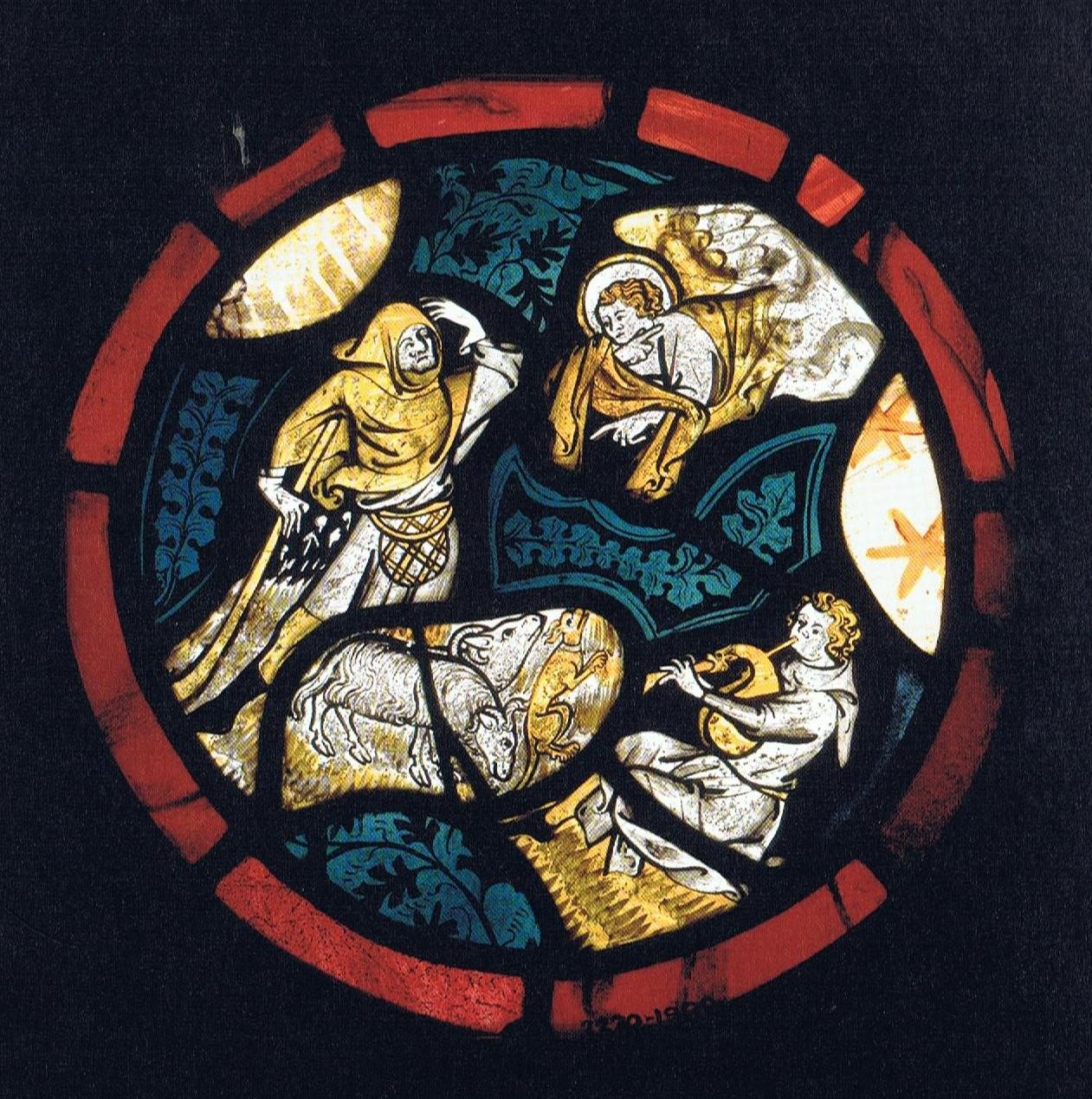
Figure 17: The stained glass in Henry Vaughan’s home was particularly notable and included this English piece, ‘Annunciation to the Shepherd’, 1340-5, bequeathed by Henry Vaughan to the Victoria and Albert Museum.97
As well as Turner and Constable, of whom it seems that he bought directly from the Constable family when he visited them in 1874 and 1875, visitors would have been able to see works by many more artists. Among the most conspicuous of the British pictures he purchased was perhaps Gainsborough’s unfinished The Painter’s Daughters Chasing a Butterfly. Other late Georgian and early Victorian artists included Thomas Rowlandson, Sir Joshua Reynolds, John Flaxman, Thomas Stothard, Sir Thomas Lawrence, John Opie, Sir Augustus Wall Callcott, William Hilton, William Mulready, Patrick Nasmyth, Charles Robert Leslie, James Holland, Edward William Christy (who met Henry Christy in Venice), Sir John Everett Millais and Lord Frederic Leighton; works now divided between Tate Britain and University College, London.
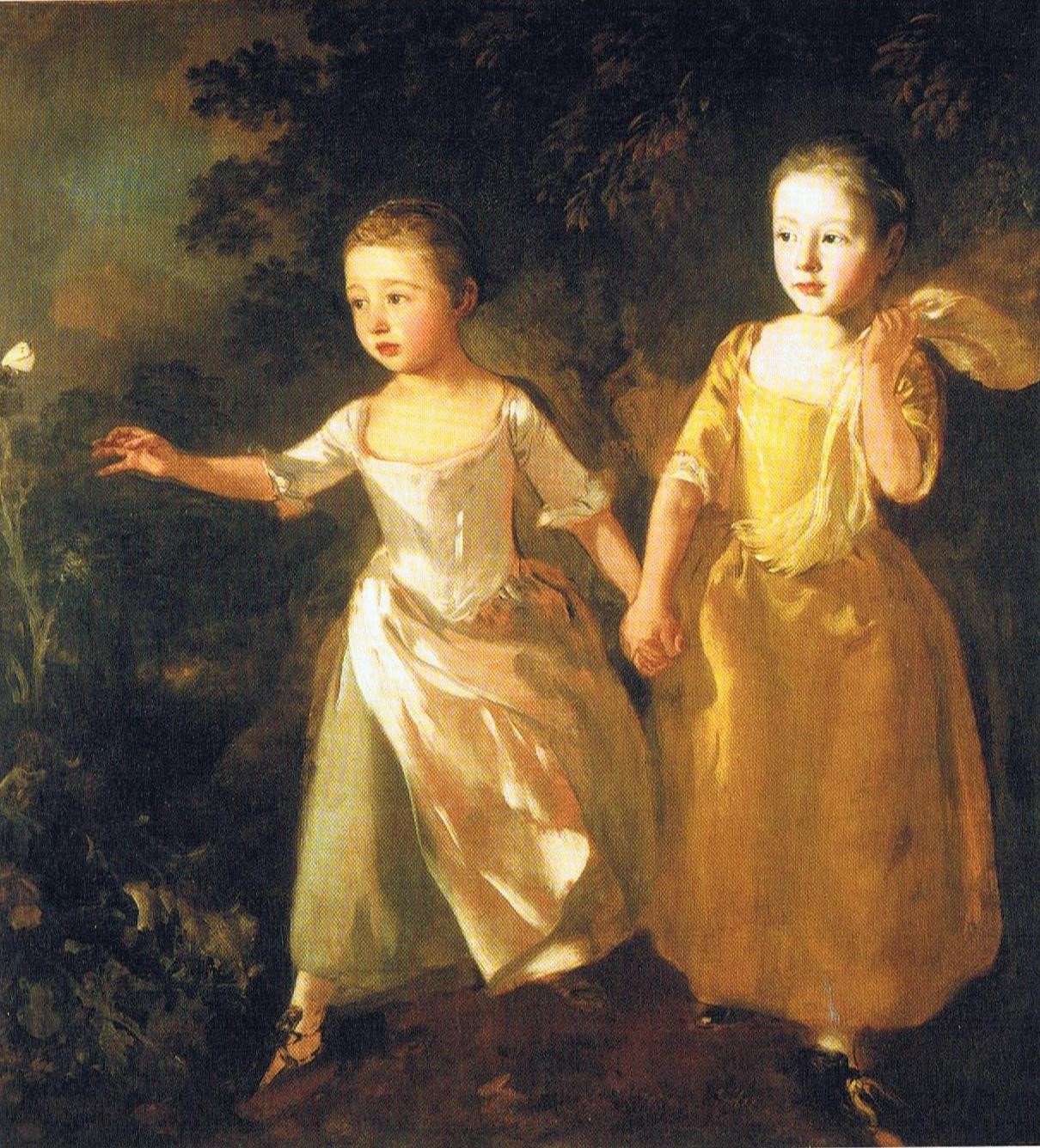
Figure 18: ‘The Painter’s Daughters Chasing a Butterfly’, by Thomas Gainsborough, c. 1756, bequeathed by Henry Vaughan to the National Gallery.98
In 1866, Henry was a founder member of the Burlington Fine Arts Club, a private club for connoisseurs, its members included Dante Gabriel Rossetti and Hercules Brabazon. The club at first held informal gatherings in members’ houses to discuss their collections, perhaps Vaughan’s own, but later met in a rented building at 17 Saville Row. Henry often lent works from his collection to these exhibitions: for example, thirteen drawings and prints in 1870 for a celebration of the work of Raphael and Michelangelo.99 Henry, a daily visitor for an evening cup of tea, ‘became the father of the club … and final court of appeal of many questions … as his knowledge was so marvellously accurate’. He was remembered as the ‘most modest of men and always desirous of hearing the opinion of others’.100
Henry and George Vaughan sold twenty perches of land for £15 in 1867 to a consortium of Frampton Cotterell and Watley’s End hatter Methodists.101 From 1787, Watley’s End possessed the flourishing Salem Wesleyan Methodist Church, its stone consecrated by John Wesley. However, with the Wesleyan schism there was a move in the 1850s to build an alternative place of worship.102 A George Luton registered a Methodist meeting place in Watley’s End in 1851.103 Ebenezer Chapel was finally built in 1869 on land right alongside Vaughan’s factory with George Lewton (sic), among its seven trustees in 1884.
Personally acquainted with Turner, Henry placed him ‘at the heart of his appreciation of British art’.104 His Turner collection of over 200 watercolours, drawings and proofs was ‘singularly choice and indeed hardly paralleled in this country’.105 The critic John Ruskin wrote of Henry to his secretary in 1866: “He is a great Turner man. Please write to him that he would be welcome to see everything of mine, but I would rather show them to him myself.”106 Ruskin does appear to have visited Vaughan as he made a faithful copy of a detail from one of his Turner watercolours, Llanberis Lake and Snowdon. Baker thought that ‘the remarkable combination of high-minded ideals and practical programmes of action that Ruskin embodied appears to have proved inspirational to Henry’. Henry’s will of 1887 specified that bequests to Dublin and Edinburgh were ‘to be used in the same way as the Turners that Ruskin had presented to the Fitzwilliam Museum in Cambridge in 1861’. This extended to the specially designed cabinets in which the works arrived. That of Dublin survives: the complete 31 watercolours are stored vertically and can be viewed individually on an attached fold-down table when not exhibited.107
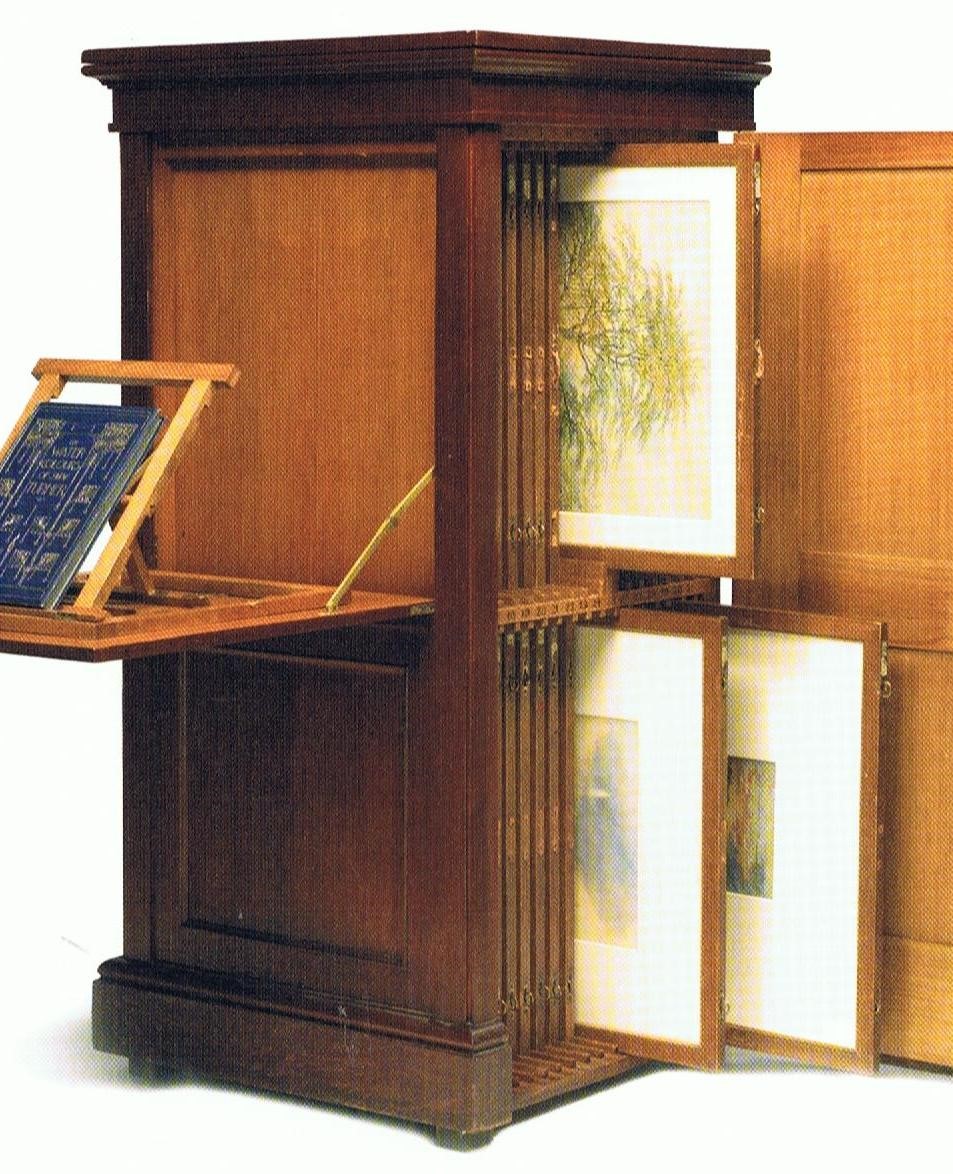
Figure 19: The cabinet, following that of Ruskin, in which Henry Vaughan’s bequest arrived in Dublin.108
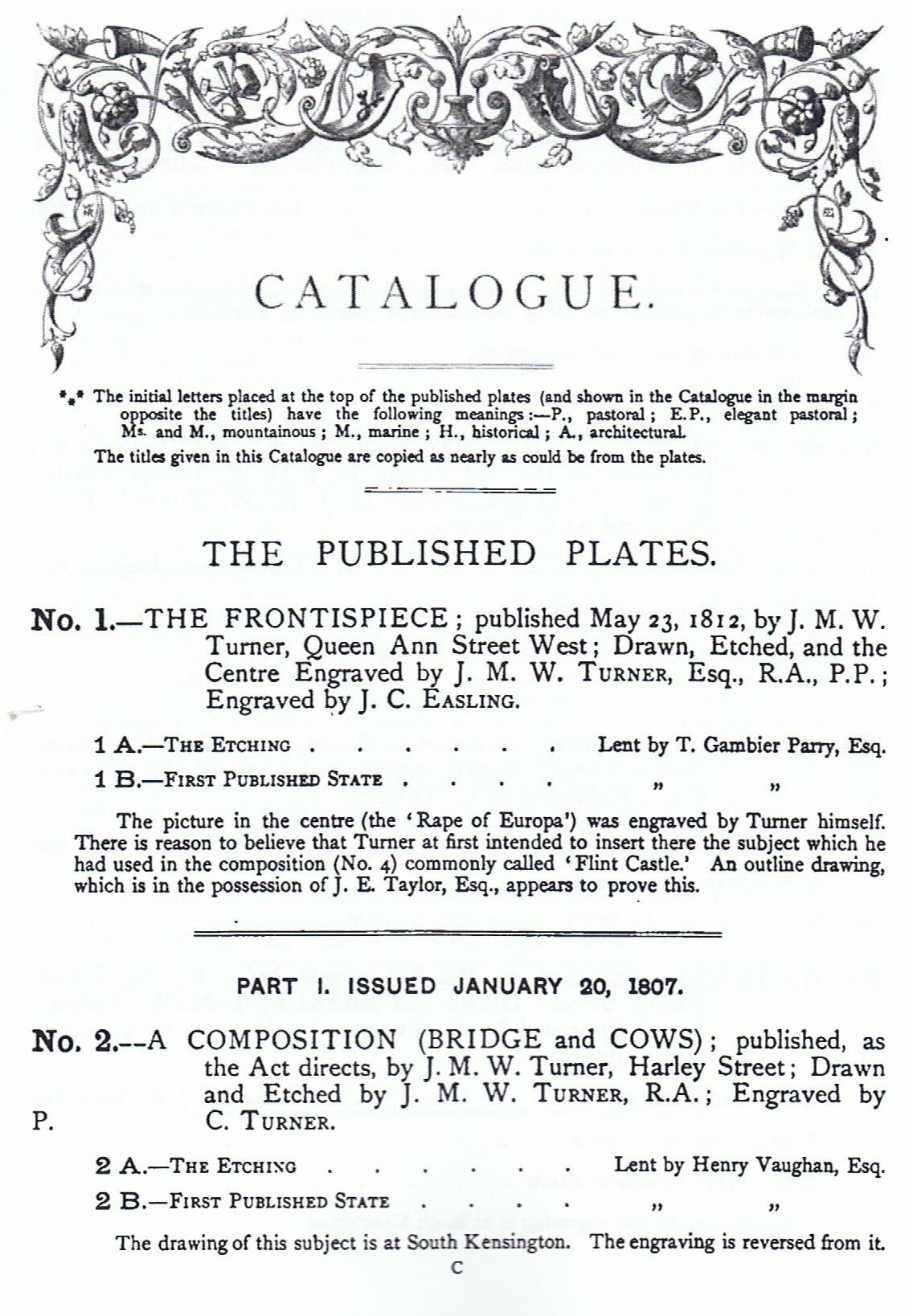
Figure 20: The first page of Vaughan’s exhibition catalogue for Turner’s ‘Liber Studorium’, with Vaughan’s first contributions at the bottom. There are twelve pages of ‘Introductory Remarks’.
In 1872, in his only known publication, Henry collaborated with the collector J E Taylor on the catalogue for the Exhibition Illustrative of Turner’s ‘Liber Studorium’ held at the Burlington Fine Arts Club.109 This pioneering study reviewed a large series of engravings after landscape compositions, personally supervised by Turner from his early days.110
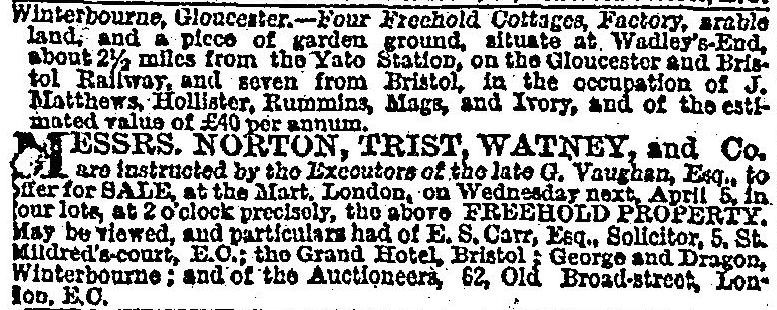
Figure 21: The auction advert for the Vaughan Watley’s End factory.
Government land records of 1873 show the Vaughan estate at Watley’s End split between the brothers: George of Hyde Park, London, had over three acres at an estimated annual rent of £16 5s; Henry, of Regent’s Park, over one acre at £14 1s.111 By this time, the factory was of limited value for hat-making with the industry in severe decline generally, but particularly in South Gloucestershire; the Christy closure was but three years away. Despite the piece of land already sold for the Ebenezer Chapel, the factory estate still included four freehold cottages, arable land and a ‘piece of garden ground’ with an estimated annual value of £40. It was leased for some time to local hatters. George died in 1874 and the Vaughan property was auctioned in London eighteen months later.112 It seems likely that this sale was organised by Henry, the last living sibling, and that the inheritance went to funding his art collection.
Henry was elected a Fellow of the Society of Antiquaries (FSA) in 1879 and was a member of the Athenaeum Club, as was Turner. In 1887, Henry gave five important Michelangelo drawings, all bought at the Woodburn sale in 1860, to the British Museum.113 Each night he walked to dinner at his Club until a few months before his death of ‘senile decay’ at home in 1899, aged 90.114 All of the non-conformist evidence is complicated by the Vaughans’ Church of England burial plots. Henry was buried in 1899 in an austere family vault at Highgate Cemetery with a simple inscription that does not mention his generosity to the nation. Alongside him are George III (1874), their sister Mary (1865) and her husband, Philip Sancton (1866).115
Although he spent liberally, Henry left £230,002 2s 11d.116 His current biography decides that ‘though undoubtedly one of the outstanding English collectors of his time, and a generous lender to exhibitions and museums, he appears to have been something of a recluse, whose reputation is largely based on his important gifts and bequests to British museums’.117
By his will, Henry distributed his wealth among various medical charities and hospitals, and the bulk of his art collections among museums and galleries. The British Museum department of prints and drawings received a further 555 items, including fifty-seven old master drawings, over 300 drawings by John Flaxman, Thomas Lawrence, and Thomas Stothard, and, above all, nearly a hundred proofs of Turner’s Liber Studiorum and twenty-three drawings connected with it. Some of the drawings were transferred from Vaughan’s Bequest to the National Gallery, which also received various sculptures and Italian and British paintings (the latter now in the Tate collection).118 To the Victoria and Albert Museum he assigned his collections of stained glass and carved panels, six Turner watercolours, and the full-scale studies for Constable’s Hay-Wain and Leaping Horse, which had been on loan to that museum since 1862.119 To University College, London, he bequeathed the remainder of his Liber prints, his collection of Constable mezzotints, his Rembrandt etchings and other prints, and a number of English drawings. The rest of Vaughan’s outstanding and scholarly collection of Turner watercolours was divided between Edinburgh and Dublin; the National Gallery of Scotland received a representative selection of thirty-nine drawings, and a similar group of thirty-one drawings went to the National Gallery of Ireland.120 Henry stipulated that the Turner watercolours must not be on permanent display, since continual exposure to light would then result in their fading, but be restricted to January showings. Since then, in Dublin and in Edinburgh, the January Turner exhibitions have become a tradition.121 Other bequests included £1,000 for a statue to the memory of Gainsborough.122
Perhaps there are two remaining questions. The first is whether the two Henrys ever met? They were contemporary and had plenty of opportunity; it is difficult to imagine that they did not know of each other. They each owned, in part, hat manufactories in both Southwark and South Gloucestershire. They were Quakers, travellers, and collecting men of taste and distinction, living in London society. Between them, they were members of most of the capital’s learned associations. Could they have met in Venice? Through Ruskin or Cooke? Perhaps even through some connection of the Vaughans with Sheridan; or Gainsborough or his admirer, Constable, both of Suffolk? The second is whether it is reasonable to link the men through their South Gloucestershire hatting outposts and to intertwine their stories of art, science and industry, and, if so, to what point? Both were men with inheritances although Christy worked for much of his life. But they both, in a real sense, were separated financially from the working man. They used their fortunate state in dedicated, obsessive even, quests. The art they left behind and, in Christy’s case, the ground-breaking scholarship, continues to affect the public and academic worlds. It must also be true that the purchases made, for example that of Constable’s Hay-Wain, owe a debt to the considerable profits that came from the South Gloucestershire hat factories for over 50 years and, therefore, to the common hatters who worked in them.
Original papers, publications and items
[1] C H B Elliott, Winterbourne, Gloucestershire (1936, reprinted Bristol, Frenchay Tuckett Society, 1999), p. 63. John Christie-Miller, collected, Feltmakers, a Record of Two Feltmaking Families (Private circulation, 1957), pp. 16-17.
[2] Christy & Co. went into voluntary liquidation in 1969 after John Christie-Miller led the 1966 merger of the five remaining English felt hat firms in a new company called Associated British Hat Manufacturers Limited (ABHM). The entire share capital of ABHM’s Christy’s subsidiary was sold for £1.2 million in 1980 to Cadogan Oakley, a private investment and property company, which reinstated the name of Christy (Stockport Express, 10/4/1989; The Guardian, 17/12/2007). In 1996, Christy's was sold for £3 million to venture capitalist Maurice Pinto (Manchester Evening News, 1/3/1996). Manufacturing is now largely in China.
[3] Elliott, Winterbourne, Gloucestershire, p. 63.
[4] Jill Cook, Senior Curator of Archaeology of Human Origins, BM, during a paper ‘In Pursuit of the Unity of the Human Race: the Life, Work and Collecting of Henry Christy (1810-1865)’ given at Turquoise, Henry Christy and museum collections: an interdisciplinary conference, 11-13/12/2009, BM.
[5] ‘What is so extraordinary about the blockbuster opening at the British Museum is that it manages to summon any real mortal from the blood and darkness at all ... what is manifest in this spectacular collection of more than 80 objects, from the terrifying masks to the terrifying muskets, is just how foreign each must have been to the other: Cortés eye to eye with Moctezuma’ (Laura Cumming, ‘Moctezuma: Aztec ruler’, The Observer, 20/9/2009, p. 17).
[6] In 1865, by Thomas Woolner, a founder member of the Pre-Raphaelite brotherhood in 1848. Christy is in eminent company. Other busts, statues and memorials by Woolner, sculptor, poet and gold miner, include those of Thomas Carlyle, Charles Darwin, Edwin Landseer, John Stuart Mill, Cardinal Newman, Alfred Tennyson, William Wordsworth, and Queen Victoria.
[7] Turner in January 2010 (Royal Scottish Academy Building, Lower Galleries, Edinburgh, 1-31/1/2010). ‘Turner: Master of Light’ – a celebration of Turner watercolours at the National Gallery (Dublin, 1-31/1/2010). For a commentary on Vaughan and the respective Turner collections see Charles Baker, J M W Turner, The Vaughan Bequest, Edinburgh, National Galleries of Scotland, 2006; and Viola Barrow, ‘Turner in the National Gallery’, Dublin Historical Record, Vol. 44, No. 1, Spring 1991, pp. 6-16.
[8] Vaughan bought the Hay-Wain from Joseph Gillott, a Victorian entrepreneur and a key figure in the history of collecting and patronage from the mid-1840s. 'Gillott's adviser and agent William Cox bought the picture for him from the sale of George Young (1798–1880s) of Charles Street, London, and Appleby Tower, Ryde, Isle of Wight, at Christie's, 19 May 1866 (lot 25) for £1,365. Young, a surgeon, was a friend of Constable and a patron of many British painters, for example, Collins, Nicol, Faed, Webster and Clarkson Stanfield. Christie's archive copy of the Young sale catalogue reads ‘Gillott resold to H Vaughan & given by him to the National Gallery March/86’ (Jeannie Chapel, ‘The papers of Joseph Gillott, 1799–1872’, Journal of the History of Collections, 20(1), 2008, pp. 37-84).
[9] The National Gallery, NG 1207.
[10] ‘Mr Vaughan’s Gift’, The Athenaeum, 13/3/1886, p.364. The Times, 17/3/1886, p. 6. Vaughan kept this cutting until his death in an album / scrapbook on the Hay-Wain (Baker, J M W Turner, p. 120).
[11] Baker, J M W Turner, p. 7.
[12] Henry Christy born 26/7/1810, Kingston-upon-Thames (W J Harrison, rev. A. Bowdoin Van Riper, Oxford Dictionary of National Biography, OUP, 2004); Henry Vaughan born 7/4/1809, Southwark (Baker, J M W Turner, p. 9). Christy is widely reported as a second son, but there was a second son, Charles, who died aged 13 months (Obituary notice in ‘The Anniversary Address of the President’, Proceedings, Quarterly Journal of the Geological Society, Vol. 22, 1866, pp. xxx-xxxi). Christy’s elder brother, William FLS and FZS, died 24/7/1839, aged 31, and had ‘distinguished himself as a botanist’ (‘Obituary, Henry Christy’, The Gentleman’s Magazine, 10/1865, pp. 514-516). A second cousin, William ‘Miller’ Christy became an authority on Essex history and a member of the Essex Archaeological Society (‘Obituary’, The Times, 1/2/1928).
[13] The firms were at loggerheads in 1818 when Christys was accused of poaching two of Vaughan’s London workers (Letters, Christy Archive, Stockport Heritage Museum, 13&16/11/1818). In 1831, Vaughan chaired the London manufacturers strike committee of which the Christys were members (Minute of the Meeting of the Master Hat Manufacturers, Museum Tavern, Blackfriars Road, handbill, 24/3/1831). During the 1834 strike, family members were ‘in and out all day’ of each other’s offices (B/W/W/1/2, CA).
[14] Christy: Cook, Unity of the Human Race. Vaughan: Obituary, The Times, p. 8; H C G Matthew, Brian Harrison, Oxford Dictionary of National Biography, OUP, 2004, p. 176.
[15] The Anti-Slavery Reporter, London, 6/10/1841, p. 210, for a meeting of Christy and others with Sir Robert Peel, just returned for his second term as prime minister. The Examiner, 6/12/1845, p. 776, for Christy’s signature, with his father and others, to a ‘Declaration of ther Merchants and Bankers of the City of London on the Subject of the Corn Laws’. For Syria, Denmark and Ireland see ‘Obituary’, The Gentleman’s Magazine.
[16] Will of George Vaughan, 20/3/1826 (codicils 22/3/1727 and 30/8/1827), proved 1/4/1828 (PROB 11/1739, TNA, p, 241).
[17] William Miller Christy married Ann Fell at Red Cross Street Friends’ Meeting in Southwark 19/2/1805; the Fells were a prominent Quaker family. The couple lived in East Street, Walworth, until at least 1807, then Clapham Road, Lambeth, Apprenticed 1/11/1824 (W M Christy & Sons, 100 Years of the Royal Turkish Towel, 1851-1951 (Manchester, 1951), p. 2; Harry Duckworth, private 2007).
[18] William Barber, The Chronicles of Canal Street c1807-1868, private, 1868 (Christy & Co, reprint 1965), p. 9.
[19] 1841 Census.
[20] 1/4/1843 (Christie-Miller, Feltmakers, a Record, p. 9).
[21] The stamp was used to authorise, among other official documents, completed bank cheques (‘Miscellaneous’, Geological Magazine, Vol. 2, 1865, pp. 286-288. Paul H Emden, Quakers in Commerce (London 1940), p. 161; Christy, Turkish Towel, p. 2).
[22] Daily News, 22/7/1853.
[23] Handily at 48 Gracechurch Street, Christy’s London headquarters (Morning Chronicle, 26/3/1847, passim).
[24] Morning Chronicle, 26/8/1848.
[25] The partners wrote that the felt ‘much uneasiness at thy commencing the business of a Country Banker, and at thy withdrawing thy Capital to support the same, contrary to thy express agreement entered into between us dated 1 of 1mo 1825. We therefore give thee notice that the partnership between us will be dissolved on the 27 12month next coming. In order to meet the present wants of the Trade we desire that that amount of the capital so withdrawn be immediately replaced by thee London 15 of 12Mo 1825 (B/WW/4/9, Christy Archive, Stockport). In 1828, he also agreed to leave the cotton trade (James Turner, The First Shop in the Trade - some aspects of the history of the felt hatting industry in the early nineteenth century from the archives of Christy & Co, Unpublished MSc thesis, University of Manchester Institute of Science & Technology, October 1986, p. 39).
[26] ‘As confidence waned during the depression of the early nineteenth century the works was sold before it was complete, but remained in the family’ (Penny McKnight, Stockport Hatting, Stockport MBC, Community Services Division 2000, p. 60).
[27] Partners’ Memo Book, 18/1/1835, 17/9/1836, CA; J H Smith, The Development of the English Felt & Silk Hat Trades 1500-1912, (Unpublished PhD thesis, University of Manchester, 1980), p. 172.
[28] Barber, Chronicles, p. 12.
[29] ODNB.
[30] 5/1/1844, CA. Also Smith, Hat Trades, p. 175.
[31] Partners’ Memo Book, 6/1845, CA; Smith, Hat Trades, p. 173.
[32] Cook, Unity of the Human Race.
[33] Cooke collected over 20,000 drawings of his travels. He was dubbed ‘Venetian Cooke’ for his portrayals of the craft of the Adriatic Sea and the lagoons, which he sometimes inscribed ‘II Lagunetto’ (‘Cooke, Edward William (1811–1880)’, John Munday, ODNB, OUP, 2004).
[34] The Armstrong Collection, The National Trust.
[35] Obituary, The Gentleman’s Magazine.
[36] Research collection, 49/49, Surrey Archaeological Society, Guildford.
[37] William Miller Christy, the first son of Richard, was an enthusiastic collector of insects, designed his own trap, and was successful in securing a large number of rare specimens. He owned Wicken Fen, now a National Nature Reserve and one of the most important wetlands in Europe. Wicken Fen was made over to the National Trust in 1899. Four of his entomological diaries of collecting records from 1889-1902 exist (uls-a340860, Natural History Museum).
[38] A later version by John Christie-Miller lays credit elsewhere: ‘Samuel Holt was the manager of the Silk Hat plush weaving department in the Hillgate Mill ... He adapted the mechanism of the silk plush weaving loom to reproduce the same of towelling material ... He took out patents which he sold to W M Christy & Sons. He went to America where he set up business on his own account’ (Barber, Chronicles, Note 19, p. 31).
[39] Christy’s also exhibited their hats at the Great Exhibition; Thomas Christy junior was on a four-man jury which selected for display articles of clothing ‘for immediate, personal or domestic use’ (The Times, 26/4/1851).
[40] Christy, Turkish Towel, p. 11.
[41] Christy towels continue in 2009: available www.christy-towels.com, accessed 6/8/2009, but have not been recently manufactured in the UK, being in the main produced in India, as well as Turkey & Portugal. Fairfield Mill closed about 20 years ago & the manufacturing moved to Carrfield Mill, Hyde, the current head office. No members of the Christy family are still connected with the business. Christy was previously owned by Courtaulds Textiles & then went through a management buy out in 2000. In July 2006, Welspun Ltd, an Indian textile company, acquired 85% of Christy UK Ltd & changed its trading name to Welspun UK Ltd in 2009 (Company email 2009). There is an extensive archive of the papers of W M Christy & Sons Limited at the John Rylands University Library at Manchester (GB 111 WMC). There are 10 classes of documents; in WMC/8 there are a number of publications concerning the Christy hat making company &, as many of the records include family correspondence, especially WMC/9, other references may yet be found.
[42] ODNB.
[43] Henry Christy’s diary, 27/7/1852 (BMAOA archive, British Museum).
[44] ODNB.
[45] Cook, Unity of the Human Race. Martin R Delany, The Condition, Elevation, Emigration, and Destiny of the Colored People of the United States, Politically Considered (1852; reprinted, Presser 1968). Victor Ullman, Martin R. Delany: The Beginnings of Black Nationalism (Beacon Press 1971).
[46] English anthropologist regarded as the founder of cultural anthropology. His most important work, The Origins of Culture and Religion in Primitive Culture, 2 vols. (1871, reprint, New York, Harper & Row 1958) was influenced in part by Darwin’s theory of biological evolution, developed the theory of an evolutionary, progressive relationship from primitive to modern cultures. Tylor was knighted in 1912 (ODNB, 2004; Tylor, Sir Edward Burnett. Encyclopædia Britannica Online Library Edition, 2010, http://library.eb.co.uk/eb/article-7484).
[47] Edward Burnett Tylor, Anahuac: Or Mexico and the Mexicans, Ancient and Modern, 1861. (Reprint, General Books 2009), p. 3. Lazarist College in Paris was the ‘training-school of the French missionaries in China’. Henry gave a skeleton of manatee (manatis) to the College of Surgeons ‘which he had obtained at considerable expense, and which, from its exceptionally perfect state, has excited much interest’ (‘Obituary’, The Gentleman’s Magazine).
[48] Manchester Art Gallery, www.manchestergalleries.org, accessed 31/12/2009.
[49] Age 73, hat manufacturer, at Towns End, Kingston, with five unmarried children living at home (1851 Census); died Woodbines, Kingston 24/1/1858, landed proprietor (Death certificate, General Register Office).
[50] Charles Darwin, The Origin of Species by Means of Natural Selection, Or The Preservation of Favoured Races in the Struggle for Life (London, John Murray 24/11/1859).
[51] Geoffrey Bibby, The Testimony of the Spade (London, Collins 1957), p. 50.
[52] 28/3/1834 (P/2/6, CA).
[53] The debate on the American technological superiority in some industries begins with higher wages with E Rothbarth, 'Causes of the Superior Efficiency of USA Industry as Compared with British Industry', The Economic Journal, Vol. 56, No. 223, September 1946, pp. 383-390. It was associated with the great availability of free land by Peter Temin, 'Labour Scarcity and the Problem of American Industrial Efficiency in the 1850s', The Journal of Economic History, Vol. 26, No. 3, September 1966, pp. 277-298, and H J Habakkuk, American and British Technology in the Nineteenth Century (Cambridge University Press 1967). Russell I Fries, 'British Response to the American System: The Case of the Small-Arms Industry after 1850', Technology and Culture, Vol. 16, No. 3, July 1975, pp. 377-403, discussed the best known example of American superiority.
[54] Turner, The First Shop, p. 76.
[55] The manufactory was established in 1813 (Based on a letter by the then foreman Luke Fowler 18/7/1834, CA).
[56] A fur picker and former, a wool mixer, duster, two carding machines, a winder, a jigger, two planking machines, a sewing machine, and a machine for tearing up pairings; and four men to teach their use. None of the shopping lists for this trip agree exactly (P/3/6, with many of the invoices in VV/2/35, CA). See also Turner, The First Shop, p.85.
[57] Barber, Chronicles, p. 25.
[58] Cook, Unity of the Human Race.
[59] Bibby, Testimony of the Spade, pp. 52-60.
[60] Christie-Miller, Feltmakers, p. 21; Barber, Chronicles, p. 25.
[61] ‘Celtic Monuments’, The Gentleman’s Magazine, 11/1863, pp. 552-553.
[62] ‘Obituary’, The Gentleman’s Magazine.
[63] There is a plaque to Henry’s memory in the Abris at Laugerie Basse at Les Eyzies, in which village he is still venerated as one of the founders of the prosperity & fame of the district (www.leseyzies.co.uk).
[64] Bibby, Testimony of the Spade, p. 56.
[65] Glyn Daniel, A Hundred and Fifty Years of Archaeology, 1950 (reprint, Duckworth 1978), p. 101. Daniels added, however, that ‘many other names should be associated with Lartet and Christy in the work of cave exploration and excavation in south France at this time’, p. 95.
[66] Comptes rendus, 29/2/1864; Henry Christy, ‘On the Prehistoric Cave-Dwellers of Southern France’, Transactions of the Ethnological Society of London, Vol. 3, 1865, pp. 362-372; first read to the Society 21/6/1864.
[67] Édouard Lartet and Henry Christy, Reliquiae Aquitanicae being contributions to the archaeology and palaeontology of Pèrigord and the adjoining provinces of Southern France (London, Williams 1875). Professor Jones brought out new volumes to critical acclaim for a number of years, for instance, Part V, discussed in Popular Science Review, 7-26, 1/1868, p. 298. ‘Pre-historic Man’, review, Reliquary, 4/1866, pp. 238-239.
[68] Died 4/5/1865. ‘Obituary’, Geological Magazine, London, Vol. 2, Part 12, 1865, pp. 286-288. ‘Obituary’, The Gentleman’s Magazine.
[69] William Chapman, ‘Towards an Institutional History of Archaeology: British Archaeologists and Allied Interests in the 1860s’ in Andrew L Christenson, edited, Tracing Archaeology’s Past, The History of Archaeology (Southern Illinois University 1989), pp. 156-157. Henry had been selected by the Royal Society council as one of its fifteen candidates to be elected a month after his death (‘Obituary’, The Gentleman’s Magazine).
[70] Will 5/2/1863; probate 23/6/1865, CGPLA England & Wales. ‘Obituary’, The Gentleman’s Magazine. Henry Christy’s trustees included Sir John Lubbock, FRS.
[71] ‘The Chiefs of the British Museum, Mr Augustus Wollaston Franks’, The Art Journal, 6/1891, pp. 167-168.
[72] Margorie Caygill & John Cherry, editors, A W Franks – Nineteenth- Century Collecting & the British Museum (BM, 1997); ODNB. Henry’s trustees may still be active; in 1955 they gave a ‘generous grant for the purchase by the British Museum of a Tudor hat-badge (British Museum Quarterly, Vol. 20, No. 2, September 1955, pp. 37-38).
[73] Partners’ Private Memorandum Book 28/12/1869: ‘the place shd. be repaired & the business carried on there for another year’ (B/P/VV/5/28, CA).
[74] Charles Sabel and Jonathan Zeitlin, ‘Historical Alternatives to Mass Production: Politics, Markets and Technology in Nineteenth-Century Industrialization’, Past & Present, No. 108, August 1985, p. 161.
[75] Census 1841-1891.
[76] C Jeffrey Spittal, Notes on the Free Churches of Frampton Cotterell (Private reprint, Zion News, February - November 1987).
[77] Henry Vaughan, Obituary, The Times, 27/11/1899.
[78] George Vaughan I, Obituary, Morning Chronicle & London Advertiser, 28/11/1780. Marriage at St Thomas, Southwark, 23/12/1742, George Vaughan of the parish of Christ Church (Christ Church, Survey of London, Vol. 22: Bankside (the parishes of St Saviour and Christchurch, Southwark), 1950, pp. 101-107).
[79] Elizabeth King was the granddaughter and heir of Isaac Adams. Adams, appointed a Thames waterman in the Royal household, 8/3/1690 (Index of Officers; A, Office-Holders in Modern Britain: Vol. 11 (rev.): Court Officers 1660-1837, 2006, pp. 684-715). Adams's family can be traced further through his initial apprenticeship as a carpenter, arranged by his father, Arthur, a waterman (Records of the Worshipful Company of Carpenters, 1654-1694: Vol. 1: Apprentices' Entry Books, 1660, 1913, pp. 47-51). Isaac Adam's will, 25/11/1725, proved Surrey Archdeaconry Court 17/12/1733. Will of Mary, his widow, dated 29/8/1747, proved PCC 96 Lisle, 11/4/1749.
[80] Three Gravel Lane Houses on 30/9/1747 as niece & heir of John Adams; a house & garden in Gravel Lane, & two houses near Gravel Lane, as granddaughter of Isaac Adams; with George Vaughan on 24/11/1747, the 'Summer House' for life upon the death of Mary Adams (G O Bellewes, Surrey Archaeological Collection, 1915, Vol. XXV111, p. 178, Surrey Archaeological Society, Guildford.
[81] Winterbourne Land Tax Assessment, Langley & Swinehead Hundred (Q/Rel, GA); Winterbourne Parish records (BRO).
[82] House of Commons Journal, Vol. 36, 5/2/1777, p. 119; 18/2/1777, pp. 192-3.
[83] Whitehall Evening Post, 6/61780 and the two subsequent editions.
[84] This practice was known in hat making as 'bugging': A cant word among journeymen hatters, signifying the exchanging some of the dearest materials of which a hat is made for others of less value. Hats are composed of the furs and wools of divers animals, among which is a small portion of 'bever's' fur. Bugging is stealing the bever' (Captain Francis Grose, A Classical Dictionary of the Vulgar Tongue, 1796, 3rd edition (E Partridge, 1963, London, Routledge & Kegan Paul). This substitution makes the 'master hatters great and daily sufferers by the journeymen' (House of Commons Journal, Vol. 36, 18/2/1777, pp. 192-3).
[85] Woodfall's Register, 2/12/1790.
[86] The long and interesting story of Vaughan’s involvement in this royal philanthropy towards the ‘shameless swindler Sheridan’ is told by Louis J Jennings in ‘The Croker Papers – The Correspondence and Diaries of the Late Right Honourable John Wilson Crocker, Secretary to the Admiralty from 1809 to 1830’, Quarterly Review, 158:316, October 1884, pp. 532-535. This account was dismissed as untrue by John George Robertson in Encyclopedia Britannica, 11th Edition, Vol. XXIV (CUP, 1911). pp. 845-847). Thomas Gainsborough’s renowned painting of Mrs Richard Brinsley Sheridan, 1785-1787, is in the National Gallery of Art, Washington, USA (Andrew W Mellon Collection 1937.1.92).
[87] Handbill of result of the master hat manufacturers' meeting, 24/3/1831 (CA).
[88] Thomas Christy to Samuel Christy, 13/4/1831 (CA).
[89] Letter 26/9/1834 (P/2/11, CA).
[90] Baker, J M W Turner, p. 10.
[91] Ibid.
[92] Photography by York and Son (National Monuments Record.CC97/00252). Reproduced by permission of English Heritage.
[93] Baker, J M W Turner, p. 24.
[94] The National Gallery, NG1786.
[95] Census 1841-91.
[96] List compiled by Baker, J M W Turner, p. 10, from Henry’s will and from documents at the Victoria and Albert Museum (MA/1/V127).
[97] Victoria and Albert Museum, No. 2270-1900
[98] The National Gallery (NG1811).
[99] Verbatim: Baker, J M W Turner, pp. 12-15.
[100] Letter, G C Williamson, The Academy, 9/12/1899, p. 698; Obituary, The Times.
[101] Veronica Smith, Jeffrey Spittal, Sydney Marks & Derek Andrews, compiled, Around Frampton Cotterell and Winterbourne (Stroud, Tempus 2000), p. 60.
[102] The Ebenezer Chapel was home for the splinter United Methodist Free Church, formed in 1857 from the Wesleyan Methodist Association (1835) and the Wesleyan Reformers, established in protest at the perceived dictatorial practice of the central Wesleyan Ministry (conversations with staff at the Methodist Studies Unit, The Wesley Centre, Oxford Brookes University).
[103] George Dutton's Collection, Watley's End, 8/2/1851 (GA, D205/21). In April 1884, among the trustees for the Ebenezer Chapel is George Lewton (sic) (BRO, 35230). George Lewton was also the 1871 Watley's End census administrator (1871 Census).
[104] Baker, J M W Turner, p. 17.
[105] Obituary, The Athenaeum, 2/12/1899, p. 767.
[106] Quoted in B Dawson, Turner in the National Gallery of Ireland (Dublin, 1988), p.39.
[107] Baker, J M W Turner, p. 20-22. See also David K Van Keuren, ‘Cabinets and culture: Victorian anthropology and the museum context’, Journal of the History of the Behavioral Sciences, Vol. 25, Issue 1, 2006, pp. 26-39.
[108] Baker, J M W Turner, p. 22.
[109] J E Taylor and H Vaughan, Exhibition Illustrative of Turner’s ‘Liber Studorium’ Containing Impressions Of The First States, Etchings, Touched Proofs, And Engraver’s Proofs, reprint Kessinger 2009 (London, Burlington Fine Arts Club 1872).
[110] For a broad and useful commentary, see the review by ‘C F B’ of a reprint: W G Rawlinson, Turner’s Liber Studiorum (London, Macmillan, 1906), in The Burlington Magazine for Connoisseurs, Vol. 9, No. 40, July 1906, pp. 280-281.
[111] George: 3 acres 1 rood 18 perch; Henry: 1.3.27 (Return of the Owners of Land, 1873; HMSO, 1875).
[112] The Times, 1/4/1876.
[113] The Academy, 2/12/1899, p. 638. ODNB.
[114] Obituary, The Times. ‘Of independent means’, died 26/11/1899 (Death certificate, General Record Office).
[115] Baker, J M W Turner, p. 23. Previous Vaughan generations are buried at Christ Church in Southwark where the most imposing of the still standing memorials is the family's large altar tomb. It is carved with detailed family genealogy which includes those buried in Highgate. Christ Church, Survey of London, Tomb east face: George V. 27/11/1780, aged 64 (Vaughan, hatmaker, died 13/11/1780 at Gravel Lane: 25/11/1780, St James' Chronicle); Elizabeth V., wife, 6/1/1789, 71; Mary V. wife of George V. 11/11/1786, 31. South face: Isaac V. 18/11/1825, 76. North face: George V. 7/2/1828, 73; Elizabeth V., relict, 2/5/1852, 80. West face: Elizabeth V. 6/1/1798-25/1/1803, Isaac V. 7/10/1801-11/7/1802, Isaac John V. 16/6/1803-7/2/1804, Catherine V. 28/10/1806-9/8/1808; also the children of George & Elizabeth V.: Mary Sancton, b Mary V., foundress of 'Mrs Vaughan's Charity', d. 2/11/1865; George V. d. 7/10/1874; Henry V. d. (no date).
[116] Probate.
[117] ODNB.
[118] ‘Our National Museums and Galleries: Recent Acquisitions, The National Gallery’ Magazine of Art, 5/1901, pp. 374-376, & August 1901, pp. 512-513. ‘The Turner Bequest’, The Athenaeum, 10/9/1910, pp. 299-300.
[119] ‘Our National Museums and Galleries: Recent Acquisitions, Victoria and Albert Museum’ Magazine of Art, 11/1900, pp. 71-74.
[120] Verbatim, ODNB. Also ‘The Scottish National Gallery’, The Art Journal, 3/1901, pp. 71-72.
[121] Obituary, The Times.
[122] Sir Thomas Brock was chosen as the sculptor; the work was finished in 1906 and now in the collections of Tate Britain (N02074). ‘Passing Events’, The Art Journal, 3/1900, p. 95.